
Sanskrit Course for Yoga Practitioners#
Next Course DatesMarch 3rd - 31st, 2026 LevelFoundation
Explore Sanskrit ResourcesFormat#
- 5 weekly one-hour online sessions
- Each session includes recitation/chanting for improving pronunciation
- Optional guided self-study component for learning Devanagari using engaging resources
- Analysing select Yoga Sutras
- video recordings of missed live sessions
Course Outline#
- Sanskrit History, evolution and cultural significance
- Devanagari script/ IAST symbols
- Abugida script features
- syllable formation
- Grammar
- word formation and joining (sandhi)
- sentence formation
- Enunciation
- chanting and recitation
- Vocabulary
- breaking down well-known mantras and sutras
- Breaking down select yoga sutras
- along with a general overview of Samkhya philosophy
- Further study
- Online tools and resources
Audience#
Suitable for beginners with no or limited prior experience with the Sanskrit language.
The course is designed especially for the Yoga practitioner or teacher who is looking to build on their enunciation and understanding of Sanskrit terminology as well as understanding the philosophical context of the Yoga Sutras of Patanjali.Requirements#
Anyone with an interest in learning Sanskrit will benefit from this course. Practicing Yoga is not essential. No religious affiliation necessary. However, spiritual topics will be discussed. Since sessions are delivered online, a suitable device for joining the online sessions is required. Recordings will be made available for those unable to attend live sessions.
Subscribe to Mailing List#
Sign up to infrequent newsletters, Sanskrit resources and upcoming course info.
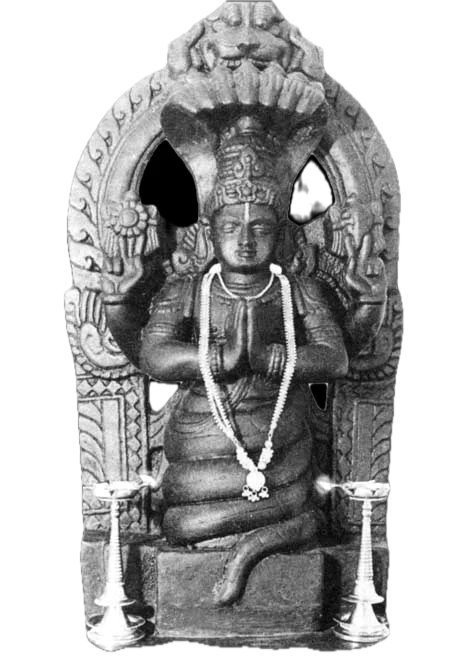
Statue of Patañjali who is credited with composing the Yoga Sūtras, as well as the Mahābhāṣya - a seminal work on Sanskrit Grammar. 1
Course Overview#
In an age where Yoga has become a ubiquitous term and a worldwide phenomenon, every day yet more people are looking to see past the outer sheaths of body and breath to discover the depth of Yoga philosophy as signposts to a holistic path of life. Whether they look to explore the sounds of the mantras or to deepen their understanding of the metaphysical concepts, a study of the Sanskrit language holds the key to delving deeper.
The Sanskrit for Sutras course is designed especially for the Yoga practitioner or teacher who is looking to build on their enunciation and understanding of Sanskrit terminology, along with the philosophical context behind the Yoga Sutras of Patanjali, and find a fuller meaning to the sutras, mantras and invocations - for a more connected practice.
Sanskrit, the self-proclaimed devavāni or “Language of the Gods” is described by many as a “perfect” language of great depth and rigour. It is said that the sonic vibrations of the syllables convey their essence so perfectly that the meaning is not ‘understood’ but ‘felt’. In any case, good pronunciation is important to convey the right essence of the sanskrit terms, mantras, or even names of the āsanas.
While the grammar of Classical Sanskrit tends to be a complex subject requiring a level of dedication and time to acquire, this course will only deal with the rudimentary concepts that aid us directly in enhancing our pronunciation, ability to read sanskrit text in devanagari or IAST and familiarise ourselves with the grammatical patterns of sentence construction.
About the Course Designer#
Chaitanya spent the initial phase (ie āśrama2) of his life in India. He studied Classical Sanskrit as an academic subject as part of his school education. His mother tongue is Hindi, a language that has descended partly from Vedic Sanskrit and one of the most widely spoken languages in North India.
From an early age Chaitanya has been fascinated by languages and linguistics. Sanskrit holds a special place for him with its unmatched precision of grammatical logic, advanced phonetic system and most of all - the ritual and mystical significance of Sound that that it lends to the cultures of the Indian sub-continent.
The onset of gṛhastha āśrama3 accompanied his move to the UK where he has since been based. He is a fluent communicator in English and currently working on a book about his year-long bicycle tour of South America with his family. During his travels he learnt to speak Spanish, adding another Indo-European language that he can communicate in to his repertoire. His recent enquiries into ancient Indian philosophical systems have led him back to ancient texts and necessitated a reacquaintance with ’the language of Gods’.
Chaitanya is also dedicated Yoga practitioner of 15 years. His vehicle is the bike, astride which he traces the less travelled paths of the Saṃsāra4.
He currently lives in Bristol with his wife and two children.
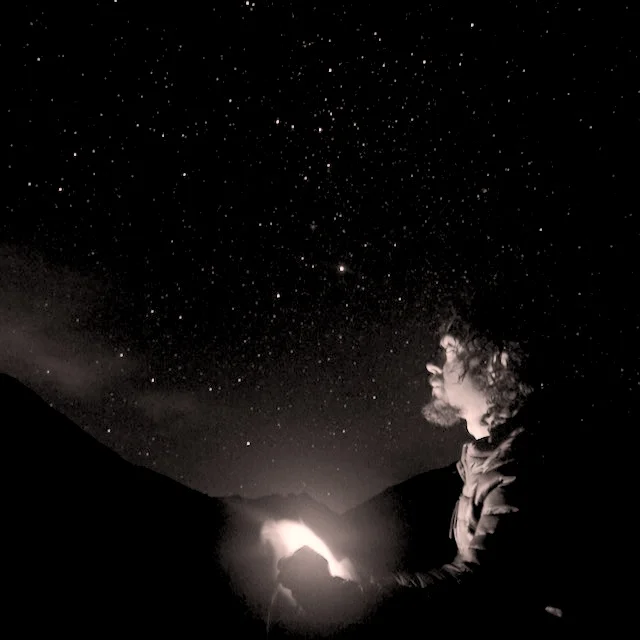
What is without is within
#
Footnotes#
Banner Image: A page from a 19th century manuscript of the yogabhāṣya, which is a commentary on the Yoga Sūtras composed around 2000 years ago, based on image from Wikimedia Commons, CC BY-SA 4.0

brahmacarya āśrama: student life, the first of four stages of life according to Indian philosophy. Each stage lasts a quarter of a lifespan ↩︎
gṛhastha āśrama: householder life, the second of four stages of life.
The remaining āśrama are Vanaprastha (retired life) and Sanyāsa (renounced life) ↩︎cycle of existence, also translates to ’the world’ ↩︎
